

The commodity trap is real, and most digital print service providers know it firsthand. When every competitor offers the same paper, the same turnaround, and the same finishes, the only lever left is price. Margins erode. Differentiation disappears. Growth stalls. But the equipment sitting in many pressrooms today is capable of far more than its operators are asking of it; and specialty media is the bridge between what a press can do and what it’s actually being used to produce.
For digital print providers willing to look beyond standard stocks, five vertical markets represent some of the most consistent, margin-rich opportunities available: hospitality, retail and grocery, entertainment, education, and manufacturing. Each has distinct application needs, and each is underserved by commodity print.
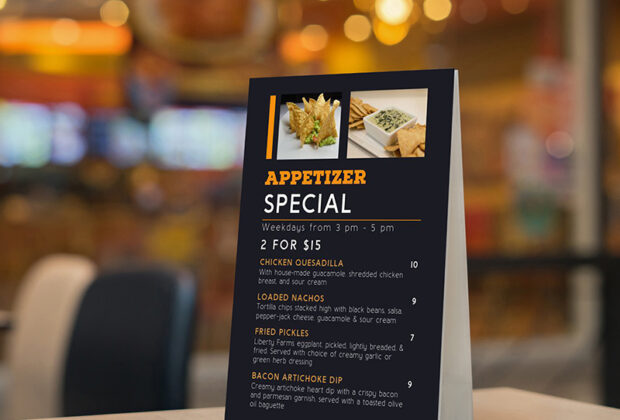
Hotels, restaurants, and dining venues depend on print to shape the customer experience at every touchpoint — from the menu a guest opens at the table to the door hanger left on a guestroom handle. These are short-run, high-turnover pieces that command premium pricing precisely because they need to look and feel premium. Durable, wipeable stocks for menus, table tent cards for seasonal promotions, branded recipe cards, and room collateral are all applications where specialty media outperforms commodity paper on every dimension that matters to the buyer: durability, appearance, and tactile quality.
In retail environments, print competes for attention in one of the most visually cluttered contexts imaginable. Shelf wobblers, push/pull door graphics, point-of-purchase displays, and in-store promotional signage all need to stand out — and they need to hold up. Commodity stocks don’t cut it for applications that face daily handling, moisture, and lighting conditions that expose every flaw in a substrate. Promotional magnets are a particular standout in this category: durable, repositionable, and kept by customers long after a campaign ends, they represent recurring revenue that standard print simply can’t generate.

A concert ticket, a VIP credential, a commemorative event program — these aren’t just functional items. For the person holding them, they’re souvenirs. Specialty print transforms event collateral from something disposable into something worth keeping, and that shift in perceived value is directly reflected in what buyers will pay. Foil accents, security features, durable coatings, and laminated finishes are all achievable on today’s digital press platforms with the right media — and the entertainment vertical, with its tight timelines and high volumes, rewards printers who have done the qualification work ahead of time.

Educational institutions generate more specialty print than most people realize. Acceptance letters on premium stock, parking passes, sticker and decal campaigns, ID credentials, sports schedules on magnets or foil, and planner covers are all recurring needs across K-12, higher education, and technical institutes. What makes this vertical especially attractive is the buyer profile: institutional procurement relationships tend to be sticky, budgets are allocated annually, and the decision-maker is often looking for a reliable, capable supplier rather than the lowest bid.

Safety regulations, compliance requirements, and equipment documentation create consistent, predictable demand for durable print across construction, manufacturing, and industrial settings. Instruction manuals on tear-resistant stock, OSHA compliance posters, lockout/tagout inspection tags, and plant signage for horticultural growers are applications where commodity paper literally fails — it tears, fades, and disintegrates in the environments where it needs to perform. Printers who can offer certified, application-appropriate specialty media don’t just win the job; they become a supply-chain necessity.

The opportunity is clear. The harder question is execution. Running specialty media is not the same as running commodity stocks, and printers who approach it that way quickly discover why. Press calibration, feeding behavior, fusing temperatures, and coating compatibility all vary by substrate and by technology platform. An HP Indigo, a Ricoh, a Konica Minolta, and a Xerox each have their own characteristics — and specialty media that runs beautifully on one platform may require adjustments on another.
The printers who succeed with specialty applications are the ones who do the qualification work upfront: testing media on their specific equipment, dialing in settings before a live job, and partnering with a media supplier that has done the same work at scale. Hard-won knowledge about what works on which platforms, and why, is as valuable as the substrates themselves.
The gap between what today’s digital presses can produce and what most of them are being asked to produce is one of the more significant missed opportunities in the industry. Specialty media closes that gap — and the five verticals outlined here are a practical starting point for any print provider ready to stop competing on price and start competing on capability.
Interested in learning more? [email protected] | Facebook | LinkedIn | YouTube