Cleaning and protecting synthetic menus
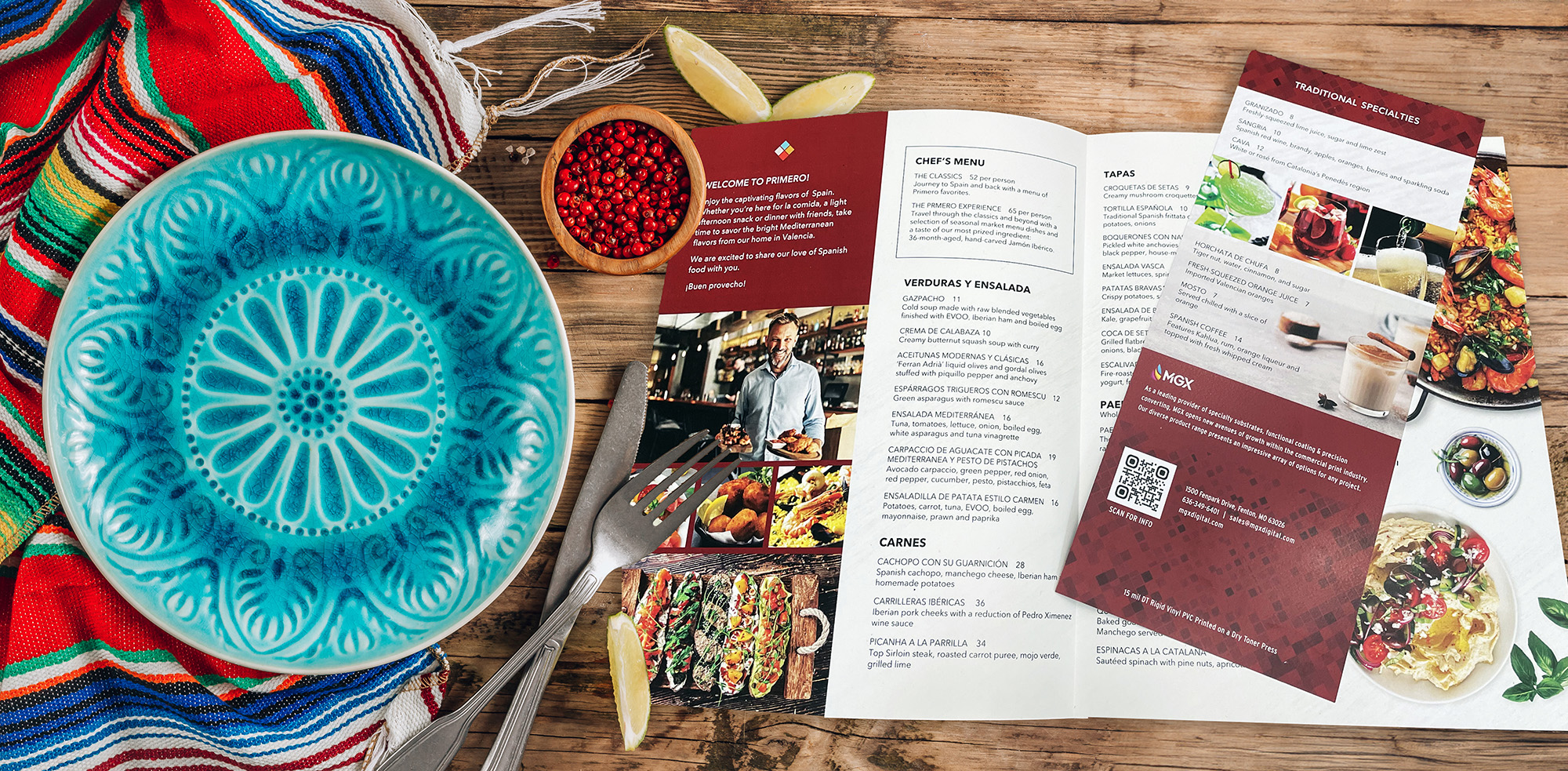
Crafted for durability and repeat handling, MGX synthetic substrates are an ideal solution for menus in busy food service environments. To help preserve their professional appearance and extend their usable life, follow these recommended care practices:
Cleaning
- Routine Cleaning: Wipe menus with a soft, non-abrasive cloth orsponge using warm water and a mild, non-abrasive dish soap.
- Avoid Harsh Agents: Do not use dish soaps with degreasing additives such as citrus oil, d-limonene, or solvents, as they may degrade the surface.
- No Harsh Chemicals: Avoid bleach, ammonia, or abrasive cleaners, which can damage the synthetic surface and compromise printed inks.
- Choose the Right Cloth: Avoid microfiber cloths, which can be abrasive. Instead, use soft cotton cloths or gentle sponges.
- Apply Indirectly: Always apply cleaning solutions onto a soft cloth—never directly onto the menu surface.
- Ensure Complete Drying: Allow menus to fully dry before stacking or reuse to prevent ink transfer or smudging.
- Test First: When using an unfamiliar cleaner, test it on a small, inconspicuous area to ensure compatibility.
Protection & Longevity
- Consider a UV Coating: For frequently handled menus, a UV coatingcan provide added protection against scratches, oils, and stains.
- Store with Care: Store menus flat in a clean, dry environment. Avoid stacking heavy items on top, which can cause indentations or warping.
- Avoid Temperature Extremes: Do not store menus near heat sources, in direct sunlight, or in cold storage, as synthetic materials may crack or deform under extreme conditions.
- Staff Training: Ensure staff are trained on proper cleaning, handling, and storage procedures to maximize menu lifespan and maintain a polished presentation. By following these best practices, you’ll keep your synthetic menus clean, durable, and visually appealing helping reinforce a quality dining experience for your guests.